I’ve spent the last decade reviewing deal memos for self storage sites across the UK. I’ve sat in rooms with developers who talk about "exponential yield growth" and "recession-proof assets." Let me be clear: nothing in property is truly recession-proof. If you ignore the reality of running the place, your occupancy levels will crater faster than you can say "Q3 projections."
My background isn't just in spreadsheets. Before I was reviewing investment packs, I was a facilities manager. I know what happens when a roller shutter jams on a rainy Tuesday or when the pest control contract you forgot to budget for starts eating into your margins. If you’re looking at a site, don’t just look at the floor plate. Look at the mud, the traffic, and the local competition.
The UK Market: Growth vs. Hype
The UK self storage sector has grown significantly over the last decade. Urbanization is the primary engine here. We are all living in smaller apartments, and as high streets shift, the demand for household storage has spiked. Whether it’s families offloading boxes because they’ve moved to a two-bed flat in London or e-commerce traders needing a local hub for inventory, the demand is real.
You’ll see glossy reports on Markets Insider or FinanceWire claiming double-digit growth. While the sector is robust, don’t take the "infinite demand" narrative at face value. Demand is hyper-local. A facility in a commuter town might thrive on household storage, while a site near a city centre needs to cater to the "last-mile" business crowd. It’s all about the specific catchments.
The "Golden Rule" of Site Selection
Before you even look at the yield, I want you to ask yourself one question: What is the local competition within a 10-minute drive?
It sounds simple, but you would be shocked at how many investors ignore it. They see a busy A-road and assume https://seo.edu.rs/blog/what-is-operational-efficiency-in-a-storage-facility-day-to-day-11117 the site will perform. If there’s an Optima Self Store or another established operator three miles away, you aren’t just competing on price; you’re competing on convenience. If your customer has to spend 20 minutes in gridlock to reach their unit, they will leave. It’s that simple.
Mapping the 10-Minute Drive
You need to map this out properly. Don’t use "as the crow flies" metrics. In the UK, a three-mile radius in central London is very different from a three-mile radius in a rural commuter town. Use drive-time mapping software to see where your customers are actually coming from. If you’re https://highstylife.com/the-real-state-of-uk-self-storage-moving-beyond-the-recession-proof-hype/ in a high-density area, a 10-minute drive is your absolute limit.
Key Metrics for Location Selection
When selecting a site, I look for three things. If the site doesn't have at least two of these, walk away.
- Population Density: You need high residential density within that 10-minute drive. Renters move more often than homeowners. More movement equals more demand. Transport Links: Visibility is good, but accessibility is better. Can a transit van get into your loading bay without blocking the entire road? If a business user can’t load their stock in five minutes, they’ll find someone who lets them. Business & E-commerce Usage: Are there independent retailers nearby? Small businesses are your best friends. They value the recurring revenue model and are less price-sensitive than households, provided the unit stays clean and secure.
The Operational Reality: Hidden Costs
Investors love to talk about low overheads. They ignore the "hidden costs" that show up in the facilities management budget. Here is my list of things people routinely forget to factor into their site selection notes:
Cost Item Why it’s often forgotten Pest Control People think modern steel units are impenetrable. They aren't. HVAC Maintenance You can't claim "premium climate control" without regular, expensive servicing. LED Lighting/Electrical Units are dark. If the lights go out, customers stop coming at night. Gate/Security Servicing Contactless access systems are great until the motor burns out on a bank holiday. Rubbish Clearance People leave junk behind when they vacate. Who picks it up?Leveraging Modern Tech
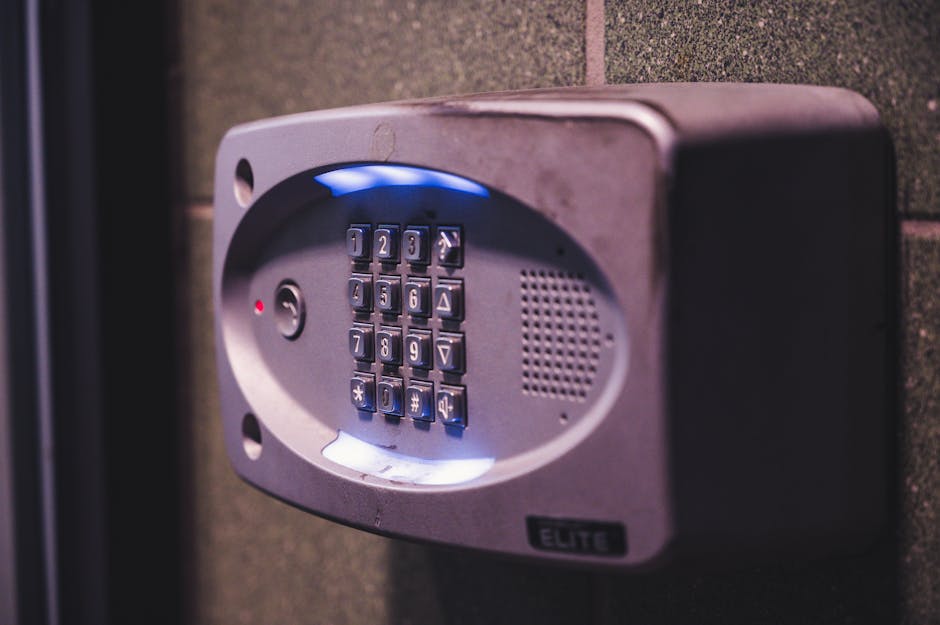
If you aren’t using online reservations and contactless access, you’re already behind. This isn't just about "innovation"; it's about reducing your staffing costs. In the early days, I spent half my time letting people into their units manually. If you want a facility that scales, you need to automate the mundane.
A customer should be able to book a unit via their phone, receive a digital code, and let themselves in. If your site’s location doesn't have the internet connectivity to support these systems, you’re going to have a massive headache. Always check the local fibre availability before signing the lease.
Why the Recurring Revenue Model Works
The reason we like self storage as an asset class is the recurring revenue. Unlike a commercial lease that might be locked in for five years, self storage is typically monthly. This reduces your concentration risk. If one business customer fails, you haven't lost your anchor tenant for a decade. You’ve lost a small percentage of your total facility revenue.
However, this only works if your unit mix is right. If you have too many giant units, you’re reliant on big businesses. If you have a healthy mix of small lockers and medium units, your revenue is fragmented across 200+ households. That is the true "recession-proof" strategy: broad, small-scale demand.
Final Thoughts for Investors
Don't be blinded by the "urbanization" stats you see in generic market reports. Just because the UK population is growing and space is shrinking doesn't mean *any* site will work.
Go to the location. Spend an hour in the car at 8:00 AM. Spend another at 5:00 PM. Look at the traffic, look at the signage, and look at the nearest competitor. If the site doesn't feel right from an operational perspective, the yield projections on paper are just creative writing. And for heaven’s sake, make sure you've budgeted for pest control. You can thank me later.